
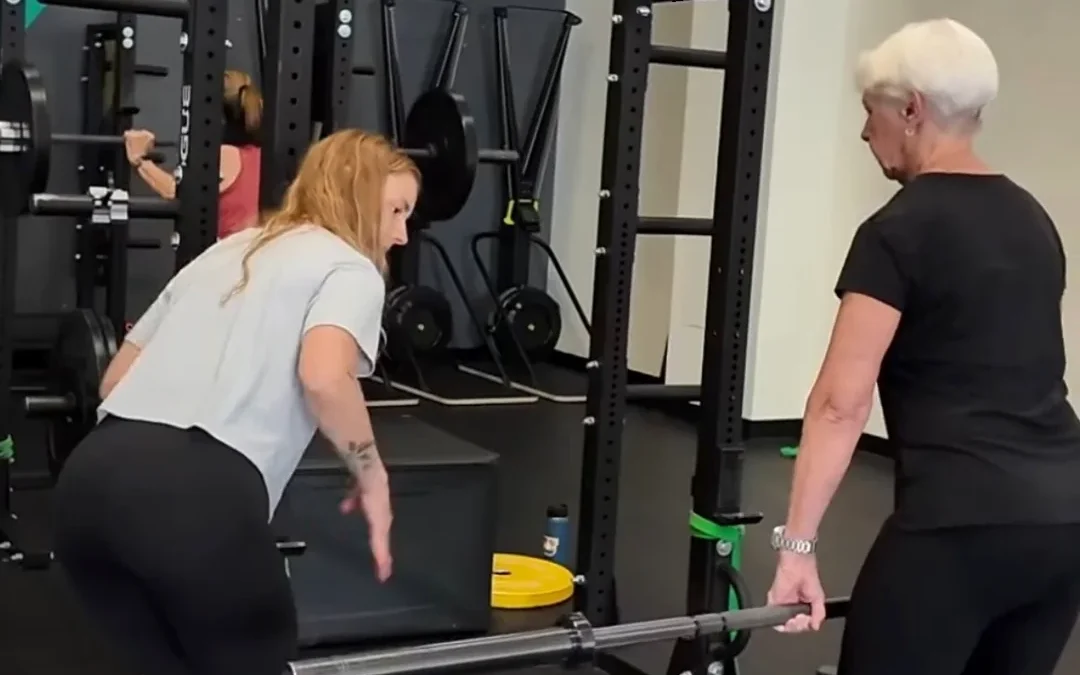
A useful plan brings together progressive strength training, appropriate weight-bearing activity and balance practice. We help you choose a starting level, learn the technique and build toward doing more. You do not need to be an experienced lifter to begin.
Work directly with Dr. Emily Warren, DPT, Cert. MDT, who is BoneFit trained. We offer in-person care in Holladay and one-on-one virtual coaching from anywhere.
Coaching includes live video calls with the PT, an exercise program with video demonstrations and access to messaging between visits. We confirm whether coaching or clinical care fits your needs before booking. No referral is needed for our in-person PT.
If your DEXA report says osteopenia or osteoporosis, “do weight-bearing exercise” may leave you with more questions than answers. What counts? How much weight? What if you also have back pain? At Mindful Movement PT, we help turn those questions into a plan you understand and can use.
Dr. Emily Warren, DPT, Cert. MDT, BoneFit trained. In-person bone-health care and Strong Bones Strength Class take place in Holladay, serving Greater Salt Lake City. Virtual coaching appointments are also available for movement education and wellness goals.
Google review: Kathy T.
“Emily has been great at helping me with proper technique to get the most out of lifting…”
Where should you start?
You do not need a perfect routine on day one. Choose the situation that sounds closest to yours.
- You are new to strength training: begin by learning a few comfortable movements with a stable setup and little or no added weight. A chair and clear floor space can be enough to practice.
- You already lift regularly: review the exercise, resistance and progression you actually use. A low DEXA result does not automatically mean giving up a familiar routine.
- You have a recent fracture, new back pain, significant unsteadiness or exercise restrictions: make the first step an individual clinical conversation. We want a starting point that fits the whole picture, rather than choosing a weight from your T-score.
DPT, Cert. MDT
Your story comes first with Dr. Emily
Emily’s early work in neurological rehabilitation shaped her interest in movement, pain and what people want to get back to.
Emily is BoneFit trained. Your fracture history, medical guidance, strength and balance help determine where to begin. She explains the purpose of each movement, watches your technique and helps you build a routine with a challenge appropriate for you.
Meet Emily and explore her approach · Request a Free Case Review to discuss how to feel stronger in the activities you enjoy.
What makes an exercise useful for your bones?
Weight-bearing activity asks you to support your body against gravity. Resistance exercise asks your muscles to work against a load, such as a weight, machine, band or your own body weight. Balance work develops the control you need for everyday movement. These serve related but different purposes.
A bone-health plan can include weight-bearing and muscle-strengthening exercise. Higher impact is not suitable for everyone, particularly with a fragility-fracture history. We choose the challenge around you.
Six exercise patterns to discuss in your bone-health plan
This is a menu of options, not a ranking that makes one lift best for everyone. During assessment, we choose a version, amount and progression that fit your needs.
1. Squats and sit-to-stand practice
Getting up from a chair connects strength work directly to daily life. A higher chair or hand support can make the starting task more manageable. As control and readiness improve, a squat variation can add resistance. The goal is a movement you can repeat well, not reaching an arbitrary depth.
A chair is a useful place to learn
- Place a solid chair against a wall so it cannot slide. Set your feet comfortably apart with the soles on the floor.
- Bring your chest forward from your hips and press through your feet to stand. Use the armrests or your hands if you need them.
- Reach your hips back toward the chair and lower with control. Reset before the next repetition.
Make it more manageable: use a higher seat or hand support. Check your practice: if you drop into the chair or rock repeatedly to stand, reduce the challenge before adding a weight.
2. Hip hinges and deadlift variations
A hip hinge helps you practice reaching and lifting using your hips. A therapist can teach the setup and help choose the height and load. A weight raised on blocks or a different implement may make the task more accessible. You do not need to start by lifting a barbell from the floor.
Learn the hip movement before the heavy lift
- Stand with your feet comfortably apart and your knees softly bent. Place your hands at the creases of your hips.
- Move your hips backward as your torso tips forward. Keep the movement small enough to control, with a long, comfortable back position.
- Press through your feet and bring your hips forward to return to standing. Practice without a weight before choosing a lifting variation.
Make it more manageable: use a smaller range and a nearby stable support. For lifting practice, raise the object instead of reaching to the floor. Check your practice: the object should stay close; reaching a heavy weight far in front adds a different demand.
3. Pressing movements
A press develops upper-body strength. The position and equipment should suit your shoulders, balance and spine history. If overhead work is uncomfortable, ask about another variation instead of forcing a movement because it appears in a research protocol.
A wall press offers a simpler starting version
- Face a clear wall and place your palms around chest height. Stand close enough that the movement feels manageable.
- Bend your elbows to bring your body toward the wall, keeping your trunk and hips moving together.
- Press back to your starting position, without rushing or forcing your shoulders.
Make it more manageable: stand closer to the wall and use a smaller elbow bend. Check your practice: change the hand position or variation if your shoulders hurt. You do not need an overhead barbell to begin learning a push.
4. Rows and pulling movements
A row gives you another way to train upper-body strength. A supported position, cable machine or band can help you learn the movement. The useful challenge depends on the resistance and how you perform it, not simply whether you use a particular piece of equipment.
Choose a secure, supported pulling setup
- Use a row machine or a resistance band attached to a secure exercise anchor, following its instructions. Check the band for damage and keep the path clear.
- Start with light resistance and a supported position that feels steady.
- Draw your elbows back alongside you, then return slowly. Let your arms do the work rather than leaning back to move the resistance.
Make it more manageable: reduce resistance or shorten the movement. Check your practice: if you must jerk your torso to finish, the setup or resistance needs adjusting.
5. Step-ups and supported balance work
Step practice connects leg strength to stairs and changing levels. Start with an appropriate step height and a stable support if needed. Balance tasks should challenge your control without setting you up for a fall. A clinician can help choose the setup and decide when to progress.
Practice the task with support within reach
- Choose a low, fixed step beside a handrail. Use clear space and secure footwear.
- Place your whole foot on the step, hold the rail as needed and step up with control.
- Step back down slowly. Practice the other leg as appropriate for your plan.
Make it more manageable: use a lower step or practice a supported weight shift on level ground first. Check your practice: needing more hand support is useful information, not a failure. Do not remove support or shut your eyes to make a general home routine harder.
6. Weight-bearing activity and selected impact exercise
Walking and other upright activities can be part of a sustainable routine. More demanding impact exercise needs a separate suitability decision. A history of spinal fracture, new pain or significant balance difficulty changes that discussion. Do not add jumps or drop landings just because you saw them in a study.
Keep enjoyable activity; decide about impact separately
For walking, choose a familiar route and a manageable duration. Notice whether the pace and terrain let you stay steady and finish with energy for the rest of your day. Build from a routine you can repeat.
The heel-drop video below is an example of a different, impact-based demand. A heel raise lowered gently is not the same as dropping onto your heels. We choose impact work separately from strength and balance practice; you do not need to add impact on your own to make a useful start.
Is walking enough? What about swimming and resistance bands?
Keep activities you enjoy. Walking supports an active routine; swimming can make exercise accessible when joints are uncomfortable. For a broader bone-health plan, discuss adding progressive resistance and balance work rather than expecting one activity to cover every goal.
Bands, machines and free weights can all be useful tools. What matters is whether the exercise provides an appropriate challenge and can progress with you. Read more about walking and osteoporosis or how to approach heavier lifting.
How much weight, and how many repetitions?
Choose a movement you can perform steadily before chasing a heavier weight. A repetition is one complete movement; a set is a group of repetitions before a rest.
General strength guidance often uses 8–12 controlled repetitions per set. At first, the priority may simply be learning a few smooth repetitions. As training becomes familiar, the final repetitions can feel challenging while your technique stays consistent. If you cannot finish with control, make the exercise easier. If the whole set becomes easy, review whether a small increase is appropriate.
Rest long enough to repeat the movement well. Progress one demand at a time: a little more resistance, a larger comfortable range or another set. Do not increase all three because a calendar says it is time. Our guide to choosing and progressing resistance goes deeper.
Muscular effort and mild short-lived muscle soreness can occur with exercise. New, sharp or focal back pain is different: stop the provoking movement and seek assessment, especially with osteoporosis or a fracture history. If soreness makes normal activity difficult or lasts beyond a couple of days, review the amount rather than pushing harder.
How we build and progress your exercise program
- Start with your history and goals. Bring your DEXA report, fracture history, current symptoms and medical recommendations. Tell us what you want to feel more capable doing.
- Learn a small number of useful movements. Practice the setup and technique with feedback. Agree on what to do between sessions.
- Track the response. Note the load, repetitions, comfort and effect on your daily activities. This helps us choose the next step.
- Progress one demand at a time. More weight is one option; range, control and task difficulty may also change. Progression follows readiness rather than a fixed week-by-week deadline.
- Build a routine you can continue. Choose the support you need through individual visits, classes or an independent plan.
How could this fit into a week?
Use this as a planning example once the movements have been chosen for you. It is a way to organize your practice, rather than a requirement to do every exercise above.
- Two nonconsecutive strength days: practice your selected squat, hinge, push and pull versions. Allow recovery between sessions for the same muscles.
- Short, regular balance practice: use the task and hand support that fit your control. Keep the environment clear and predictable.
- Activity you enjoy: continue appropriate walking or other activity between strength days. Impact is a separate choice based on your history and readiness.
This combination reflects the different jobs of strength, balance and general activity. The Too Fit To Fracture recommendations emphasize resistance and balance training rather than relying on aerobic activity alone.
How do you know your plan is working?
Write down the movement version, weight or band, sets and repetitions, effort, and how you feel later that day and the next morning. Add one everyday goal: getting out of a low chair, carrying groceries or feeling steadier on stairs.
For example: “Chair stand, hands lightly on armrests, smooth repetitions today; next morning comfortable; getting up at dinner felt easier.” This is an example of useful notes, not a patient result or a target everyone must meet.
More control, an appropriate increase in resistance and greater ease with everyday tasks are meaningful changes. They do not prove your bone density has changed. Keep those gains alongside the scan discussion with your medical clinician.
What does LIFTMOR add to this approach?
LIFTMOR studied supervised high-intensity resistance and impact training in selected postmenopausal women with low bone mass. It provides encouraging evidence for progressive loading under supervision. It does not make a particular barbell routine the right starting point for every reader. Our LIFTMOR guide explains the study, results and practical questions.
What if my hip or femoral-neck bone density is lower than my spine?
The femoral neck is part of the hip. Bone-density changes can differ between the hip and lumbar spine, so a plan should not promise that one exercise will fix one scan number. Progressive strength training can challenge the hips, legs and spine together; the appropriate exercises depend on your movement, symptoms and fracture history.
The LIFTMOR findings show why site-specific answers matter. After eight months, the training group’s average lumbar-spine change was +2.9%, while its average femoral-neck change was +0.3%. The comparison group declined by 1.2% and 1.9% respectively. Those are different responses at different sites, not a promised percentage for your own scan. Read the original trial.
If you are training consistently and your next report seems unchanged, ask whether the scans are comparable and whether the difference exceeds the testing center’s least significant change, the threshold used to distinguish a measured change from testing variation. We also want to know what has improved in strength, balance and daily life. Our DEXA-results guide explains the scan side; the lifting guide helps you review the training side.
What if you have back pain or a previous fracture?
That is a reason to make the plan more specific. Individual assessment can help connect your bone-health history with your symptoms, movement and medical restrictions. New or sudden back pain with osteoporosis needs assessment before increasing exercise loads. See our exercise-modification and compression-fracture guide.
Choose the support that fits your starting point
- Individual bone-health PT: tailored assessment and guidance when pain, fracture history or balance concerns affect your plan.
- Strong Bones Strength Class: supervised strength practice, Tuesdays and Thursdays, noon–1 p.m., at 4890 Highland Dr in Holladay.
- Virtual coaching: direct video calls with the PT, your exercise program with video demonstrations, and messaging access between visits. Our bone-health coaching page explains how we help you practice and progress with the equipment you have. We confirm clinical-care eligibility separately when needed.
Watch Dr. Emily explain and demonstrate
These videos show exercise ideas and the coaching environment. Ask which variations fit your own plan.
See what supported strength training looks like
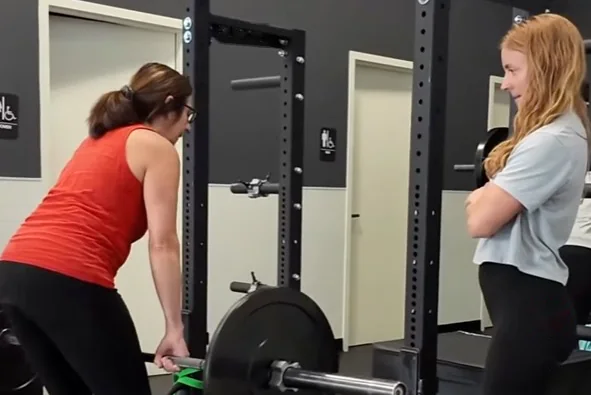
Research gives us useful principles; coaching helps you put them into practice. Dr. Emily explains how we keep our bone-strengthening classes small, watch your form and adapt exercises as you progress. We use research-informed strength training while helping you find a challenge you can manage and a routine you can keep returning to.
Being careful can include getting stronger
Dr. Emily explains that avoiding strength work altogether leaves an important part of bone-health care unaddressed. The useful next step is a plan that starts where you are and builds the challenge progressively. You do not have to begin with a barbell.
What coached practice adds
In this class overview, Dr. Emily describes progressive strength training, lifting mechanics, balance and adjustments for different starting points. This is the local class setting. If you want personal guidance at home, live virtual coaching offers a separate one-on-one option.
What progress looked like in the LIFTMOR research
There is a measurable reason to train for bone health. In LIFTMOR, postmenopausal women with low bone mass completed eight months of supervised resistance and impact training. Average lumbar-spine bone density rose 2.9%, compared with a 1.2% decline with low-intensity home exercise. Strength and physical-function measures also improved. Read the trial.
These are study averages; your progress is assessed individually. We use the research to guide purposeful, progressive training with coaching. See the full results, including how many participants maintained or increased spine bone density.
Common questions about exercise and bone density
How soon will I notice progress?
Track skills and daily function as well as your DEXA result: learning a lift, using more resistance with control or feeling steadier. Bone-density changes take longer to assess, and your medical clinician should guide repeat scan timing and interpretation.
Can I start after menopause or if I have never lifted?
Yes, you can ask about an appropriate starting plan. Training experience and age help shape the program, but you do not need previous barbell experience to learn strength exercises.
How often should I train?
Muscle-strengthening exercise on two or three days a week is a common framework, with recovery between sessions for the same muscles. The right amount and progression depend on your starting point and recovery. Strong Bones Strength Class’s Tuesday and Thursday classes offer a twice-weekly rhythm for coached practice; your individual plan may include other activity and balance work.
Do calcium, vitamin D or medication still matter?
Exercise is one part of bone-health care. Discuss nutrition, supplements and medication with your medical clinician based on your individual needs and fracture risk. Strength training is not a reason to stop prescribed treatment.
About Dr. Emily Warren, DPT, Cert. MDT · BoneFit trained · Updated September 25, 2026.