

Does your knee, back or neck decide when a ride ends? Returning to cycling after pain is more useful when you have a repeatable starting point, a way to judge your response and a plan for rebuilding the rides you miss. The first goal might be a comfortable spin around the neighborhood, a commute or a climb with friends. Those goals need different progressions.
Mindful Movement PT helps you connect symptoms with movement, strength and activity demands. In-person PT with Dr. Emily Warren is available in Holladay, serving Greater Salt Lake City. Virtual health and wellness visits offer help with movement habits and activity goals.
Start with the pattern, not another random adjustment
Before the next ride, write down where symptoms start, how long they take to appear, and what happens when you ease off. Did the problem follow a longer ride, more climbing, a new bike or a change in position? Does it happen on the trainer as well as outdoors? What remains uncomfortable later that day?
These observations help separate questions about riding demands from questions about equipment or an injury. They do not diagnose the cause. Avoid changing the saddle, cleats, handlebars and training plan together: you lose the ability to tell what helped. Record the original setup before discussing an adjustment with a qualified bike fitter.
A professional bike fit may be useful; a clinical assessment addresses pain and physical capacity. One does not automatically replace the other.

DPT, Cert. MDT
Your story comes first with Dr. Emily
Emily’s early work in neurological rehabilitation shaped her interest in movement, pain and what people want to get back to.
Emily asks when pain starts on a ride, what position changes it and what distance you want back. She connects the examination with movement, strength and activity adjustments, then reviews how the plan carries into riding rather than judging progress only in the clinic.
Meet Emily and explore her approach · Request a Free Case Review to discuss how to enjoy riding again.
Which next step fits your situation?
| What you notice | Useful next step | What to check next |
|---|---|---|
| Discomfort appears only on longer or harder rides | Return to a shorter, easier ride you can tolerate; record the response. | Can you repeat it without symptoms building or disrupting normal activity afterward? |
| Back or neck pain depends on your riding position | Discuss the sustained position, reach and ability to change position with a PT and, where appropriate, a bike fitter. | Does a manageable change help during riding and later, rather than for a few minutes? |
| Knee pain recurs with pedaling or climbing | Review training changes and arrange an assessment if it persists. Do not assume saddle height explains every painful knee. | Can you pedal and manage daily tasks without worsening pain or swelling? |
| Numbness persists after you stop, or strength is changing | Stop riding and seek medical assessment. | Clarify the cause before returning to road or trail riding. |
| A crash causes severe pain, inability to use a limb, or head-injury symptoms | Seek urgent medical care; do not use a test ride to assess the injury. | Follow the treating clinician’s clearance and restrictions. |
A new or unexplained symptom deserves its own assessment.
Make the next ride answer one question
If you have been cleared to ride and there are no concerning symptoms, choose an easy, controlled setting with a straightforward way to stop. A stationary bike may make this easier; it still needs to be comfortable and appropriate for your injury. Outdoors, allow enough movement to look for traffic, steer and brake reliably.
- Choose a starting dose you already tolerate. This may be much less than your usual distance. Your first ride back is information, not a fitness test.
- Keep the effort conversational. Leave group surges, steep climbs and hard intervals for a later stage. Use a manageable gear rather than forcing a heavy resistance.
- Check symptoms during and afterward. Note whether discomfort builds, whether you compensate, and how walking, stairs or sleep feel later and the next morning.
- Decide before adding more. If the ride produces a lasting setback, reduce the demand and discuss the pattern. If it remains manageable, repeat it before increasing one variable.
Planning example: if an easy flat ride is comfortable but the usual climb brings pain back, the next useful question is how to rebuild climbing tolerance. Completing a longer flat ride does not, by itself, show that the climbing load is ready.
Rebuild the ride you actually want
| Milestone | What it demonstrates | Possible next step |
|---|---|---|
| Comfortable everyday movement and permitted easy pedaling | You have a workable starting point. | Repeat short, controlled sessions. |
| Repeated easy rides without a lasting symptom increase | The current dose is manageable. | Add a small amount of duration while keeping effort similar. |
| Reliable turning, braking and position changes | You can manage the practical demands of riding outdoors. | Choose a familiar, low-complexity route. |
| Steady tolerance of ordinary rides | Basic riding capacity is returning. | Introduce climbing, faster work or technical terrain separately. |
A trainer session, a road descent and a technical mountain-bike trail are different tasks. Confidence and control matter alongside endurance. A race date can help define the goal, but it cannot establish tissue readiness after a fracture, surgery or other significant injury.
A plan shaped around the rides you miss
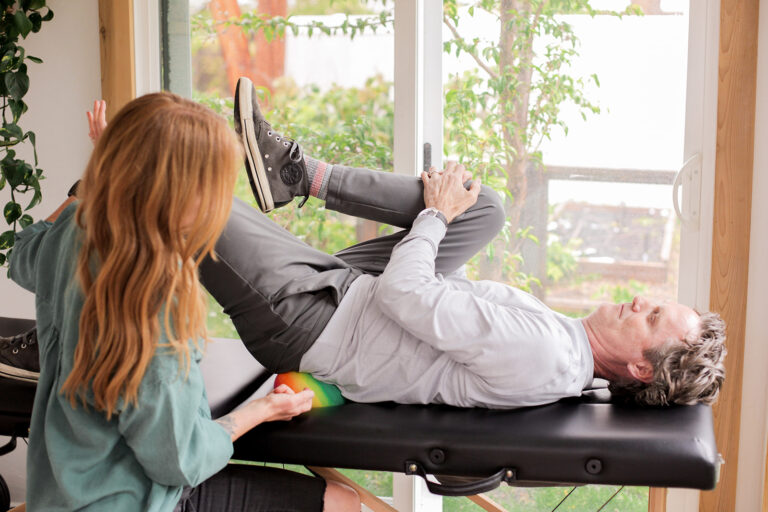
At MMPT, your first PT visit is a full hour one-on-one with Dr. Emily. Bring the ride you want back, a short training history and the changes you have already tried. You can describe or show a photo of your usual riding position; ask ahead if you want to bring equipment.
Your account of the ride helps us connect the painful task with movement, strength and your symptom response. We explain what those findings suggest and choose exercise or hands-on care around your goals. You should understand what to work on and when to review it. Tell us what happens back on the bike and in daily life; that experience helps us decide what to keep or change.
If back or neck symptoms dominate, explore our back pain care, neck pain care and treatment decision guide. For outside-knee symptoms, the IT band guide explains another possible assessment pathway.
What would make your next month of riding better?
Would you value a comfortable commute, confidence joining friends, or clarity about why every attempted comeback stalls? Bring that goal to a Free Case Review. We can discuss local PT in Holladay or virtual health and wellness visits before you choose how to proceed.