
A DEXA scan measures bone mineral density. For postmenopausal women and men age 50 or older, a T-score of −1.0 or higher is in the normal range; below −1.0 but above −2.5 is low bone mass; and −2.5 or lower is in the osteoporosis range at a valid measurement site.
Your report may show different results for the spine, total hip and femoral neck. Read the site and score together, then ask your medical clinician how the result fits your fracture history and overall risk.
DEXA T-score chart: what is a normal result?
These categories apply to postmenopausal women and men age 50 or older. A T-score compares bone density with a young-adult reference; it is not a percentage of bone loss.
| T-score | Bone-density category | Example |
|---|---|---|
| −1.0 or higher | Normal range | −0.8 |
| Below −1.0 and above −2.5 | Low bone mass (osteopenia) | −1.8 |
| −2.5 or lower | Osteoporosis range at a valid site | −2.6 |
Boundary check: −1.0 is in the normal range; −2.5 is in the osteoporosis range. A result of −2.0 does not mean “20% bone loss.” Your clinician determines the diagnosis using the full clinical picture.
Before menopause and in men younger than 50, Z-scores are generally more appropriate.
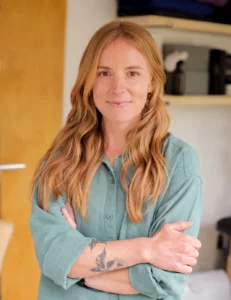
DPT, Cert. MDT
Your story comes first with Dr. Emily
Emily’s early work in neurological rehabilitation shaped her interest in movement, pain and what people want to get back to.
A scan or risk score is a starting conversation, not a complete exercise prescription. Emily connects your report, fracture history and medical guidance with your current strength, balance and the movements you want to feel confident doing.
Meet Emily and explore her approach · Request a Free Case Review to discuss how to understand your next step after a scan.
How to read a DEXA report: a simple example
Illustration only—not a patient report. This example shows three sites for a postmenopausal adult. BMD is the measured density, usually reported in g/cm²; T- and Z-scores compare that measurement with reference populations.
| Measurement site | Example T-score | Question to ask |
|---|---|---|
| Lumbar spine | -2.6 | Is this a valid spine measurement in the osteoporosis range? |
| Total hip | -1.8 | How does this low-bone-mass result fit with the spine result? |
| Femoral neck | -2.2 | How does this site contribute to my fracture-risk assessment? |
These scores describe different sites; averaging them can hide information. Ask your medical clinician to explain the conclusion, any excluded measurements, and whether the result changes your treatment. ISCD’s DXA interpretation guidance explains why measurement quality and the appropriate reference population matter.
What does a DEXA scan measure?
DEXA, also written DXA, uses low-dose X-rays to measure bone mineral density, usually at the hip and lumbar spine. A report may list several sites and scores. It is a bone-health test, not a test of muscle strength, balance, or the cause of back pain.
When is a Z-score more useful?
A Z-score compares your result with an age-matched reference. ISCD generally prefers Z-scores for women before menopause and men younger than 50. A Z-score of -2.0 or lower is described as below the expected range for age; it calls for clinical interpretation rather than automatically applying the older-adult T-score categories. ISCD official positions.
Why are the hip and spine scores different?
Different skeletal sites can have different measurements. The clinician also considers whether arthritis, a prior fracture, positioning, or another technical factor affects interpretation. Do not average the scores yourself or select whichever number feels most reassuring. Ask which sites are valid and which result guides your diagnosis.
For example, a report with a spine T-score of -2.6 and a hip T-score of -1.8 needs interpretation of both sites; the hip result does not cancel the spine result. This is an illustration, not an individual diagnosis.
Does a low T-score mean you will break a bone?
A low score deserves attention, but it does not tell the whole story. Your age, prior fractures, medical history and likelihood of falling also matter. Someone with osteopenia can still have a substantial fracture risk; two people with the same T-score can need different plans.
Your report may list two FRAX estimates: the 10-year probability of a hip fracture and of a major osteoporotic fracture. The major-fracture estimate already includes the hip, so the numbers should not be added. Our FRAX score guide explains the numbers and questions to bring to your medical clinician.
What if my T-score changes from -2.6 to -2.4?
Crossing a category boundary does not, by itself, prove that treatment worked or that osteoporosis has disappeared. Ask about the change in measured bone density, the testing facility’s measurement precision, and whether the two scans are comparable. Do not stop prescribed treatment based only on a rounded score.
Four questions that make your next DEXA conversation more useful
- Which measurements are being compared? Ask about the actual bone mineral density at the same site, not just whether the rounded T-score changed.
- Were the scans technically comparable? A different machine or analysis can complicate comparison. Your imaging provider can explain whether the change can be interpreted reliably.
- Did the change exceed measurement variability? Ask about the facility’s least significant change, the threshold used to distinguish a measurable change from normal testing variability.
- Would the result change my care? Repeat testing should have a purpose and an interval chosen for your circumstances.
These questions reflect the International Society for Clinical Densitometry’s positions. A small number change does not automatically mean your exercise plan has succeeded or failed.
When should you repeat the scan?
Ask your medical clinician when a repeat result would help guide your care. Timing depends on your treatment, health history and the reason for testing. Use the comparison questions above when the next report arrives. ISCD guidance on follow-up measurement.
What should you do after a low-bone-density result?
Start with the question you need answered. You can work on strength and confidence while your medical clinician guides diagnosis, fracture-risk decisions and treatment.
| Your main question | Useful next step |
|---|---|
| “What do my results mean, and do I need treatment?” | Review the full report with your medical clinician, including prior fractures, possible contributors to bone loss and whether medication or further testing is appropriate. |
| “Pain, a fracture history or balance concerns make exercise uncertain.” | Ask about individual bone-health PT in Holladay to assess movement and choose a starting plan. |
| “I want coached strength training.” | Explore Strong Bones Strength Class suitability. The right starting level depends on your history and current ability. |
| “I want help building a routine from home.” | Choose a virtual health and wellness visit for movement education and practical support. |
Bring your full report, your medical clinician’s recommendations, fracture history and the activities you want to feel stronger doing. A T-score alone cannot choose the right exercise, load or level of support.
Can exercise improve your DEXA result?
There is a measurable reason to train for bone health. In LIFTMOR, postmenopausal women with low bone mass completed eight months of supervised resistance and impact training. Average lumbar-spine bone density rose 2.9%, compared with a 1.2% decline with low-intensity home exercise. Strength and physical-function measures also improved. Read the trial.
These are study averages, not a forecast for your next scan. Appropriate training also targets strength, balance and everyday function. Read what LIFTMOR studied and how exercise fits alongside medical treatment.
Your goals matter between scans, too
What would you like to feel stronger doing while you wait for the next scan? Choose two or three goals that matter to you: carrying groceries, climbing stairs, getting up from a chair with less help or feeling steadier on a trail. Together, we can choose repeatable measures and record the exercise version, load, support and response, so you can see what is changing.
- Strength: can you handle the same weight with more control, or an appropriate heavier weight with the same technique?
- Everyday movement: what has become easier, and what still needs practice?
- Balance: compare a task selected with your therapist under the same supported conditions.
- Confidence and consistency: do you understand your plan and feel able to keep practicing?
If you feel stronger but your DEXA barely changes, has exercise failed? A steadier step, an easier chair rise or a lift you can manage with more control is meaningful progress. Your strength and a DEXA scan measure different parts of progress. Ask your medical clinician whether the scans are comparable and whether any change exceeds the facility’s measurement variability. We can review your exercise challenge and consistency alongside those findings, rather than judge the whole plan by one rounded T-score. See our practical progress examples from a bone-health exercise plan.
Google review: Kathy T.
“Emily has been great at helping me with proper technique to get the most out of lifting…”
Connect your scan to your next step
Videos from Mindful Movement PT
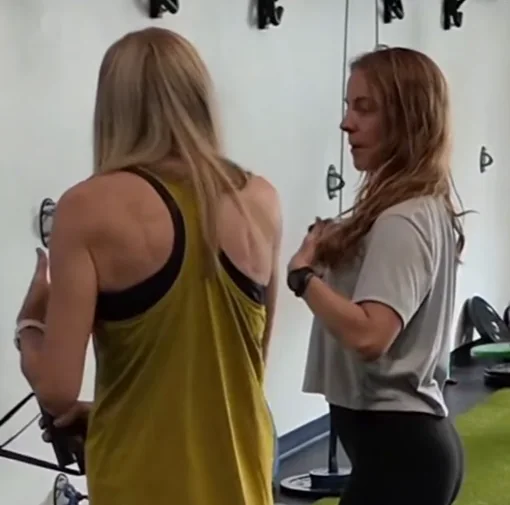
See how Dr. Emily teaches strength work, adapts movements and helps people practise with support.
See what supported strength training looks like
Dr. Emily explains the attention behind our small classes: watching your form, adjusting exercises and helping you work through questions as you build strength.
Being careful can include getting stronger
Being told to be careful with osteoporosis can leave you unsure how to exercise. In this video, Dr. Emily discusses why your bones need loading and why strength training should begin with a plan that fits you. We build the challenge progressively, with guidance on where to start and how to move forward. Read how to begin lifting with osteoporosis.
A look at coached bone-health strength training
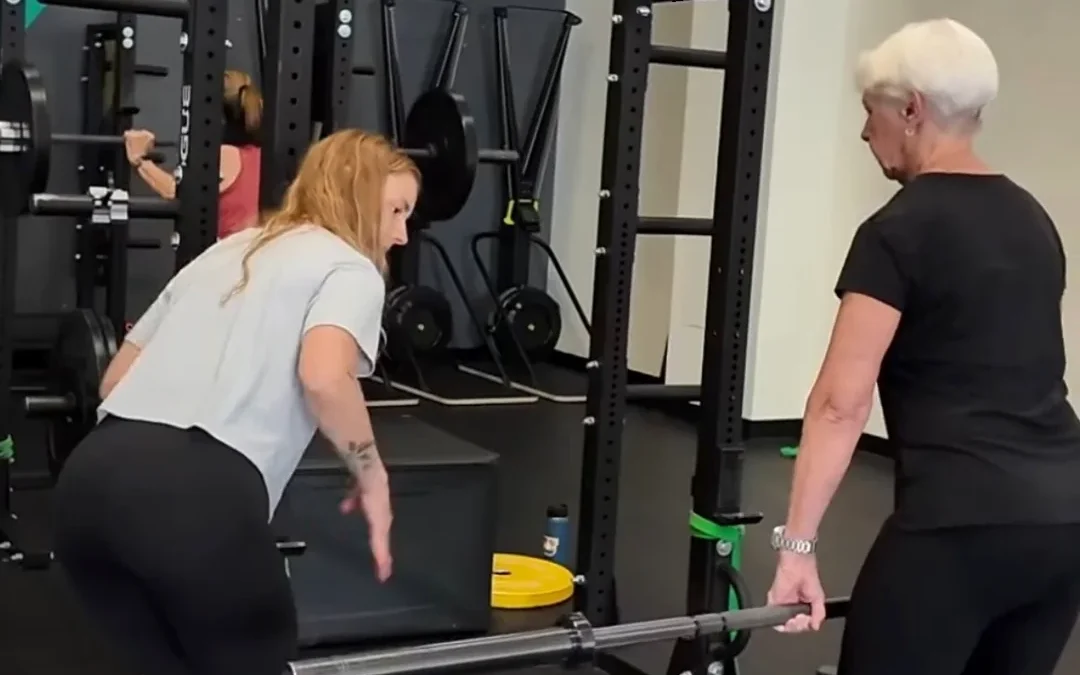
Dr. Emily describes our small-group strength program for women with osteoporosis or osteopenia: progressive strength training, lifting mechanics, balance and modifications that meet you where you are. You can begin without already feeling strong. We work toward confidence and strength that carry into everyday life. Explore current Strong Bones Strength Class details.
About the clinician: Dr. Emily Warren, DPT, Cert. MDT, is the owner of Mindful Movement PT. She is a Doctor of Physical Therapy, holds the McKenzie credential in Mechanical Diagnosis and Therapy, and is BoneFit trained.
Updated October 26, 2026. General education; an individual assessment is needed to guide your care.
Explore our patient guides · Appointment locations and formats