

Dry needling may help some neck-related and tension-type headaches when painful muscles are contributing. We combine a careful assessment with movement, education and strength work to help headaches take up less of your day.
If you are planning work, exercise or time with family around the next headache, we are here to help you make sense of the pattern and find a useful starting point.
You receive dedicated one-on-one care with Dr. Emily Warren, DPT, Cert. MDT, a McKenzie-certified physical therapist. No referral is needed. We offer in-person care in Holladay, serving Greater Salt Lake City, and a Free Case Review to talk through your questions.
Physical therapy is built to get you better faster. A clear plan and the right exercises usually help people get moving again sooner than waiting it out. Most of our patients notice improvement after their first visit. Often that means less pain before you leave, even in really challenging cases. Request a Free Case Review Expect a call or text the same day.
Could your neck be contributing to your headaches?
A headache that changes with neck movement, comes with restricted turning or is accompanied by familiar neck and shoulder discomfort gives us useful clues. It does not establish the cause by itself. We listen to the whole story before recommending treatment.
Neck-related, or cervicogenic, headache
This headache is attributed to a problem in the neck. Symptoms may be linked with certain neck movements or positions and reduced movement. An examination helps us decide whether the neck findings fit your headache pattern and whether rehabilitation is appropriate.
Tension-type headache
People often describe pressure or tightness, sometimes on both sides of the head. Neck or scalp tenderness may accompany it. A plan can address relevant muscle discomfort and movement demands while considering sleep, stress and other contributors.
Migraine with neck discomfort
Migraine is a neurological headache disorder and can also come with neck pain. Throbbing pain, nausea or sensitivity to light and sound are important details to tell us. We can work on accompanying neck symptoms alongside medical migraine care; a tender muscle does not prove that it caused the migraine.
You do not need to diagnose yourself before reaching out. Bring any existing diagnosis and tell us whether this pattern is familiar or has recently changed.

DPT, Cert. MDT
Dr. Emily can often ease pain at the first visit, even in tough cases
Emily’s early work in neurological rehabilitation shaped her interest in movement, pain and what people want to get back to.
Emily asks how your headaches relate to neck movement, work and daily activity. She checks whether a movement-related component can be addressed with PT and discusses medical assessment when the headache pattern needs a different evaluation.
Meet Emily and explore her approach · Request a Free Case Review to discuss how to understand the next step for your headaches.
What to expect in a one-on-one appointment
Your first 60-minute appointment gives us time to understand your history, examine the relevant findings and practice a plan together.
- Talk through the pattern. Where does the headache start? How often does it happen? What changes it? We ask about medicines, previous diagnoses, injury, jaw symptoms and the activities you want back.
- Explore movement and function. We assess relevant neck movement, strength, endurance and other findings, including neurological screening when indicated.
- Choose and retest. If dry needling fits, we explain the proposed area and alternatives. We compare a useful task before and after treatment and teach a home plan that fits your response.
Bring a short note of headache days and your current treatments if you can. It helps us see the pattern without making preparation another burden.
How dry needling, McKenzie assessment and pain education work together
Dry needling uses a fine, solid needle to address selected muscular symptoms; no medication is injected. For some people, easing neck discomfort creates a more comfortable starting point for movement and exercise.
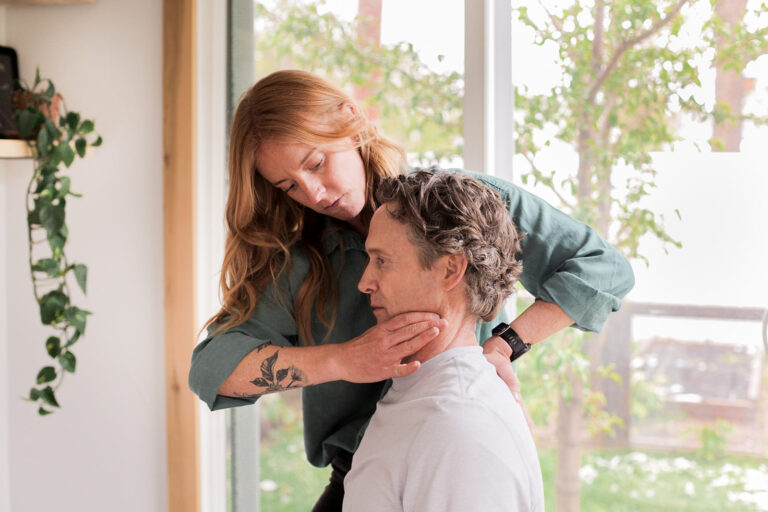
With McKenzie assessment, Dr. Emily compares how selected neck movements or positions change your symptoms. A helpful response can guide a movement strategy for home. A chin tuck or neck retraction is one possible movement to assess, rather than a prescription for everyone with a headache.
When headaches keep returning, it is understandable to become cautious about every movement. We make room for those questions and explain how sensitivity, sleep, stress and activity can affect pain. We then practice a manageable movement and strength plan. The aim is more confidence using your neck and more of your day available for work, family or the things you enjoy.
Our neck-pain care page explains the broader approach, and our neck-exercise guide shows why matching a movement to your response matters.
What does the research suggest?
There is encouraging evidence for selected headache presentations. A randomized trial of people with cervicogenic headache found that adding dry needling to PT improved headache intensity and neck disability compared with sham needling or PT alone through six months. The additional clinical benefit was small; the greater reduction in headache frequency was not statistically significant.
A 2026 review of 13 trials also reported benefits from dry needling and manual treatments across several headache presentations, while calling for better understanding of lasting effects. These varied treatments and populations do not establish one best needling routine for every headache.
An earlier 2021 systematic review found similar short-term pain effects to other treatments and possible benefits for headache-related disability, with very low certainty for the pain findings. We use this evidence to choose a reasonable option, then look at what it actually changes for you.
Useful steps between visits
What should I track before a headache appointment?
A few lines are enough: headache days, approximate duration, what the episode interrupted, treatments used and any clear change with neck movement or activity. Add nausea or sensitivity to light and sound if present. Bring your existing diagnosis and medication information; you do not have to identify the headache type yourself.
A simple note might look like: “Tuesday afternoon, about two hours. Started during desk work; neck felt stiff. A short break helped me return to work. Used my usual prescribed treatment.” Keep it brief so tracking does not become another source of worry.
Make work more comfortable
Try shorter periods in a position that consistently brings symptoms on. Vary your position, support your arms if that feels better and bring frequently used items within easy reach. We can help you test practical adjustments without making you hold a rigid posture all day.
Practice the movements selected for you
We show you how much to do and what response to notice. Do not push through a movement that brings on unfamiliar symptoms, dizziness or a substantially worse headache. Let us adjust the exercise rather than assume you need to work harder.
Build tolerance for the activities you want back
A comfortable walk, gradual strength work or another manageable activity may be part of your plan. With migraine or exercise-triggered symptoms, we coordinate the progression with your medical care. Keep medication decisions with the clinician managing them.
How will we know treatment is helping?
We want fewer days organized around headaches and more freedom to work, sleep, move and enjoy time with people you care about.
- Frequency and duration: are episodes less frequent or shorter over time?
- Daily impact: can you finish a workday, turn your head or return to an activity more comfortably?
- Confidence: do you understand what helps and what to do during a familiar flare?
An early change might be easier neck movement or reduced muscle discomfort. We also want that improvement to matter beyond the treatment room. If relief fades and the overall pattern is unchanged, we review the plan and coordinate additional care when needed.
Feeling supported between appointments
Home-exercise guidance — Google review: Amanda R.
“she broke everything down and gave me clear, realistic things to do at home.”
Your questions about dry needling for headaches
Can dry needling help migraine?
It may help accompanying muscle-related neck symptoms for some people. Migraine itself needs an appropriate medical plan. We can coordinate rehabilitation with that care and track whether your neck comfort and daily function improve.
How quickly should I notice a change?
Some people notice easier movement or less muscular discomfort during or after a session. We also look at the days that follow and your headache pattern over time. We choose follow-up around a useful response rather than promise relief by a particular visit.
What if massage helps, but the headache keeps returning?
Tell us how long relief lasts and what tends to bring symptoms back. We can assess neck movement, endurance, activity demands and other relevant findings, then decide whether a different exercise or treatment strategy would be useful.
Is dry needling the same as Botox?
No. Botox is a medical treatment used for some people with chronic migraine. Dry needling does not inject medication and may address selected muscular symptoms. We can coordinate neck care with your medical treatment rather than ask you to choose on the basis of a cure promise.
Does it hurt, and can I choose another approach?
You may feel a brief ache or twitch, and soreness can follow. We explain the process, risks and alternatives and adapt to your comfort. You can pause or decline. Exercise, education and appropriate hands-on treatment remain options.
Can I start virtually?
Dry needling requires an in-person appointment at our Holladay clinic, 4890 Highland Dr. Virtual coaching from anywhere can support movement education and home-plan review. We can discuss whether an in-person clinical assessment is the most useful first step.
When to seek medical attention first
A sudden severe headache, a major change in your usual pattern, fever with a stiff neck, new weakness, confusion or new speech or vision changes needs prompt medical attention. Do not wait for a routine consultation when symptoms suggest an emergency.
Soreness, bruising or bleeding can follow needling. Treatment near the neck, shoulder or chest also carries a risk of injury to underlying structures, including pneumothorax. Chest pain or breathing difficulty after needling needs urgent medical evaluation.
Google review: Brock A.
“She has a great bedside presence and really cares about getting to the bottom of your issue.”
Let's make more room for your day
If headaches keep changing your plans, we want to hear what you have been missing. We can explore whether neck care fits your symptoms and help you work toward more comfortable time at work, with family or doing what you enjoy.
In your Free Case Review, we’ll listen to what you want back, answer your questions and help you decide whether care with Mindful Movement fits. Send a request and you’ll hear from us the same day, by phone or text.
Dedicated one-on-one PT with Dr. Emily Warren, DPT, Cert. MDT—McKenzie certified. No referral needed. Your first PT visit is 60 minutes for assessment, explanation and a starting plan practiced together. The Free Case Review is a conversation before care.
In-person care at our Holladay clinic, serving Greater Salt Lake City. Virtual coaching from anywhere.
Call/text (385) 332-4939.