

The short answer
The main McKenzie neck exercises are retraction in sitting (a chin tuck), retraction lying down, and retraction with extension (looking up). A common starting amount for the chin tuck is 10 times with a 2-second hold. The right movement is the one that makes turning easier or draws arm symptoms back toward your neck. In one study of long-standing neck pain, about 3 in 4 people had a direction that eased their symptoms. Dr. Emily adjusts the plan to you.
Physical therapy is built to get you better faster. A clear plan and the right exercises usually help people get moving again sooner than waiting it out. Request a Free Case Review
Why not just wait it out?
Neck pain often improves over the first few weeks, but then it can stall. In a review of seven studies, pain eased a lot in the first six weeks, then stopped improving, and was no lower a year later. In another study, almost half of people still had neck pain after a year. A plan matched to how your neck responds to movement, with strength work, is built to keep you improving. Quick relief is our first goal, and most of our patients notice improvement after their first visit. Often that means less pain before you leave, even in really challenging cases. New weakness, clumsy hands, or trouble walking need urgent medical care first.
Book a Free Case Review if:
- You want relief now, not in a few weeks
- It is not clearly easing after a few days
- Pain or tingling travels into your arm
- It keeps coming back
Request a Free Case Review Expect a call or text the same day.
Cervical McKenzie exercises are neck movements selected from your response to an assessment. Retraction, looking up and a chin nod are different movements. Dr. Emily checks which direction makes turning easier or changes your neck or arm symptoms, then practices a starting plan with you. The same routine does not fit every neck problem.
One-on-one PT with Dr. Emily Warren, DPT, Cert. MDT. No referral needed. In-person care in Holladay, serving Greater Salt Lake City, and virtual coaching from anywhere.
You deserve more than a list of exercises and the hope that one will help. Below, we explain what neck retraction looks like, how it differs from a chin nod and what to notice during practice and later in the day. Our goal is to help you understand your movement and feel more confident managing it.
Start with these three ideas
- The movement should fit your response; a scan finding alone does not choose it.
- Where symptoms travel and what you can do afterward matter alongside the pain score.
- You can learn the technique here, then use live coaching to work through the parts that remain unclear.
McKenzie neck exercises: the key facts
- What they are: Repeated neck movements, chosen by how your symptoms respond.
- The main three: Retraction in sitting, retraction lying down, and retraction with extension.
- A good sign: Turning gets easier, or arm symptoms retreat toward your neck.
- Get urgent help for: Arm or hand weakness that is new or getting worse, trouble walking or balancing, newly clumsy hands, bladder or bowel changes, or neck pain after a significant injury.
Want help choosing your next step?
If you are unsure which movement fits, bring the exercise you have tried and what happens afterward. We can help you connect that response with the neck movement, sleep or activity you want to improve.
In-person PT in Holladay, serving Greater Salt Lake City. Prefer support online? Choose a virtual health and wellness visit.

DPT, Cert. MDT
Dr. Emily can often ease pain at the first visit, even in tough cases
Emily’s early work in neurological rehabilitation shaped her interest in movement, pain and what people want to get back to.
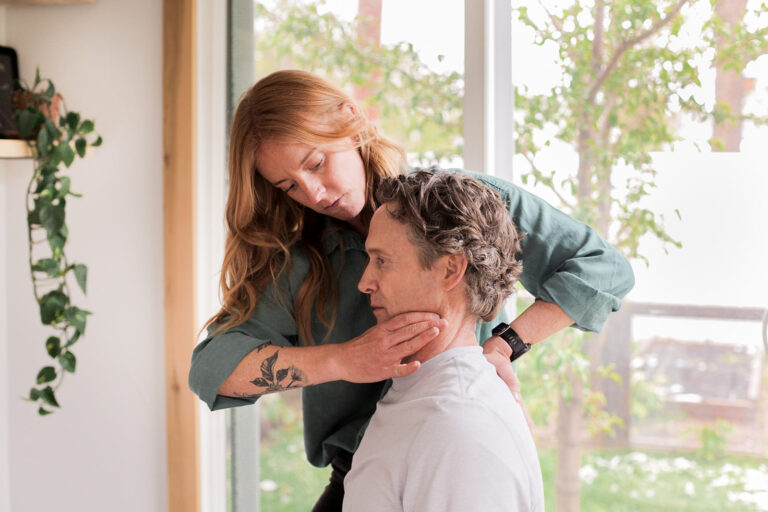
Emily asks what neck pain has changed about your sleep, work and exercise. She compares selected movements and positions, explains what the examination suggests and practices a manageable plan with you. Progress means more than brief relief: it should help the part of your day that matters.
Meet Emily and explore her approach · Request a Free Case Review to discuss how to sleep, work and return to exercise more comfortably.
What are cervical McKenzie exercises, and how are they chosen?
We start with your symptom history and a movement that matters to you, such as looking over your shoulder. We then compare how selected positions or repeated movements change that baseline. A useful response helps us choose a direction, a comfortable starting position and an exercise dose.
If you have arm symptoms, their location matters as well as their intensity. Tell us if they ease, move closer to the neck or spread farther down the arm. We combine this information with the rest of the examination; we do not assume an exercise has put a disc or joint back into place.
Our aim is a small, clear plan you can practice confidently. McKenzie-based exercise eased chronic nonspecific neck pain in the short term (García-López, Physiotherapy Theory and Practice, 2026). No single routine suits everyone, which is why we compare your response, practice the movement together and check what changes in daily life. The McKenzie Institute explains the assessment approach.
Retraction, a chin nod, and looking up or down are different movements
“Chin tuck” can be an unclear instruction. These distinctions make it easier to understand a demonstration and ask questions about your own plan:
- Retraction: the head moves backward
- The head moves back relative to the trunk while the face stays roughly forward. This is different from simply tipping the chin toward the chest.
- Chin nod: a small “yes” motion
- The head tips gently at the upper neck, with a small downward movement of the chin. The whole head does not slide backward in the same way as retraction.
- Flexion or extension: looking down or up
- The head tilts forward or backward and the direction of the gaze changes. These are different movements from keeping the face forward as the head retracts.
Use these distinctions to understand Dr. Emily’s demonstration. In a one-on-one McKenzie assessment with Dr. Emily, we show you which version fits your response, practice it together and explain what to watch afterward.
See what neck retraction looks like
Dr. Emily demonstrates a neck-retraction variation using a strap. This is one example of a movement we may explore in an assessment; we choose the direction, support and amount of movement around your response.
Key points from the video
- Dr. Emily demonstrates drawing the head back while using a strap for support.
- The strap is placed at the base of the neck and pulled gently down and forward.
- The demonstration shows repeated neck retraction with strap assistance.
Follow the demonstration in writing
This is a strap-assisted variation. The strap, added pressure and end-range movement are not requirements for everyone learning neck retraction.
- Recognize the starting movement. Watch the head move backward relative to the upper body. The face stays roughly forward rather than tipping up or down.
- Notice the strap position. In this demonstration, Dr. Emily places it at the base of the neck, around the prominent bone.
- Watch the direction of the hands. The hands guide the strap gently down and forward while the head retracts.
- Return before repeating. The video shows repeated movement. Its suggested repetitions and added pressure are examples from the demonstration, rather than a starting dose selected for your neck.
If retraction is already part of your plan, use the version and amount you were shown. If it is new to you, understand the movement before adding a strap or pressure. We can help you practice a starting version and check whether it is useful for you.
If this movement increases pain, sends symptoms farther into an arm or leg, or causes dizziness, stop and ask us about a better option. After surgery or a fracture, follow your treating clinician’s movement guidance.
What are cervical derangement and centralization?
“Cervical derangement”, or cervical derangement syndrome, is a McKenzie label for a pattern. It is not a scan finding. It means neck pain, with or without arm symptoms, that improves when you repeat a movement in one direction and stays better afterward.
Two terms go with it:
- Centralization: symptoms in the arm or shoulder fade from the far end first and retreat toward the neck.
- Directional preference: the direction of movement that brings that change.
It is common, and it is good news. In one study of people with neck pain for more than six months, about 3 in 4 fit this pattern. Drawing the head back, or back and then up, was by far the most common helpful direction.
The name sounds alarming, but it only describes how your symptoms behave: movement can change them. A clinician confirms it by testing your movements. Dr. Emily is certified by the McKenzie Institute (Cert. MDT) to do that.
Where these numbers come from: Lam 2018.
McKenzie neck exercises, step by step: how many and how often?
These are common starting points that Dr. Emily adjusts to you. Move slowly. You do not need a strap, hand pressure or force.
Get assessed first if you have arm or hand weakness or numbness, a recent neck injury or surgery, or dizziness when you move your neck.
Stop any of these if pain or tingling spreads farther down an arm, you feel dizzy or unwell, or you are worse afterward.
1. Retraction in sitting, or chin tuck (10 times, hold 2 seconds)
- Sit relaxed on a chair and look straight ahead.
- Draw your head straight back, as if making a double chin.
- Keep your eyes level. Do not tip your head up or down.
- Hold, then return to the start.
Why it helps: it is the direction most often found to ease neck and arm symptoms. Stop if: symptoms spread farther down an arm.
2. Retraction lying down (amount set at your visit)
- Lie on your back on a bed with no pillow, head resting on the mattress.
- Draw your chin in and press the back of your head gently into the mattress. Head and neck move back together.
- Relax.
Why it helps: lying down takes the weight of your head off your neck, so this can be gentler when sitting is too sore. Stop if: symptoms spread down an arm, or you feel dizzy.
3. Retraction with extension (amount set at your visit)
- Sit and do the chin tuck above.
- From there, lift your chin and tilt your head back slowly, as if looking at the ceiling.
- Go only as far as is comfortable.
- Return to the chin tuck position, then to the start.
Why it is used: when the chin tuck helps, but only part of the way. Do not add this one unless the chin tuck alone is comfortable, and ideally only when it is part of your plan. Stop at once if: you feel dizzy, lightheaded or sick, your vision changes, or symptoms spread down an arm.
4. Chin nod lying down (hold about 6 seconds, 8 to 12 times)
A small “yes” nod, not a backward glide.
- Lie on your back with a small rolled towel under your neck.
- Keep the back of your head resting down.
- Gently nod your chin toward your throat.
- Hold, then relax.
Why it helps: it works the deep muscles that steady your neck. Stop if: pain rises, or symptoms travel down your arm.
5. Shoulder blade squeeze (hold 5 to 6 seconds, 8 to 12 times)
Not a McKenzie movement, but a common next step for strength.
- Sit or stand tall.
- Draw your shoulder blades back and down. Do not shrug.
- Hold, then relax.
Why it helps: it builds the muscles that support your neck. Stop if: neck or arm pain rises.
Side bending and turning are used less often, and the direction is easy to get wrong. That choice is best made in an assessment.
What does a good response feel like?
Arm or shoulder symptoms move closer to your neck, or turning feels easier afterward. Neck ache can feel a little stronger for a short time while arm symptoms retreat. That is different from symptoms spreading down the arm.
What makes a neck movement useful for you?
The name alone does not choose the exercise. We compare what changes in your symptoms and movement, then select the direction, starting position and amount around that response. Do not add force or repeatedly move to end range simply because an online routine includes it.
Rotation or other directions
Turning and other movements may be relevant to your specific limitation. Your clinician should explain the reason for the selection and what response to monitor.
A comfortable setup and common movement mix-ups
For a seated exercise, use a stable chair, support your feet and let your arms rest comfortably. You do not need to brace into a perfect posture. If sitting makes the movement difficult, tell us; a different supported position may be more useful.
- Your chin drops toward your chest. You may be nodding or looking down rather than retracting. Compare the direction with the video.
- Your face tips upward. You may be adding extension. Retraction and looking up can be separate instructions; do not combine them unless that is your plan.
- Your whole trunk moves backward. It becomes harder to see what your neck is doing. A short side-view recording can help us review the actual movement in coaching.
- You tense your jaw or hold your breath. Reset, let your shoulders settle and breathe normally. Extra effort is not the goal.
A painful response does not automatically mean you performed the movement incorrectly. The direction, range or amount may simply be a poor fit right now. We check both technique and your response.
A gentle mobility option for uncomplicated stiffness
If you have ordinary stiffness without arm symptoms, recent injury or the warning signs below, comfortable neck turning can be a simple place to explore movement. Sit with your arms supported and look ahead, then slowly turn toward one shoulder only as far as feels comfortable. Return to the middle and compare the other side. Begin with a few easy turns rather than trying to reach farther on each repetition.
This is general mobility practice, not a McKenzie assessment or a test for a pinched nerve. Keep it easy, stop if it worsens symptoms and notice how you feel afterward.
What should you hold off on, for now?
Nothing here is banned for life. Each waits until the plain movement is comfortable and your symptoms have settled.
- Hand pressure, a strap, or pushing to the end of your range. Learn the plain movement first.
- Looking up, if it makes you dizzy. Stay with the chin tuck and tell us.
- Any movement that sends pain or tingling farther down an arm. Stop that one and get it reviewed.
- Mixing several online routines. One movement at a time shows you what is helping.
Rule of thumb: if a movement leaves you worse that evening or the next morning, it is the wrong one for now.
Is the exercise helping? Look beyond the moment
Before practice, choose one comfortable movement or task to compare, such as turning toward a doorway while seated. Note where you feel symptoms. Check again afterward, then notice the rest of your day and the next morning. You are looking for a pattern, not testing yourself repeatedly.
- Turning is easier and symptoms are not spreading
- A useful change is worth noting. If this is your selected exercise, stay with the agreed amount and see whether the benefit carries into normal activity.
- It feels better briefly, then returns
- That is information we can use. Note how long relief lasts and what task remains difficult. Review the plan before adding more repetitions or force.
- You feel worse that evening or the next morning
- A later response counts, too. Pause the exercise that repeatedly aggravates symptoms and tell us the movement, amount and timing. It may need a smaller range, less practice or a different approach.
- Pain or tingling travels farther into an arm
- Stop that movement and arrange an individual review. Do not keep repeating it to see whether you can push through.
- New weakness, balance changes or difficulty walking
- Seek prompt medical assessment. Sudden severe or rapidly progressing symptoms need urgent care; do not wait for a coaching reply.
For example, “I can turn farther after practice, but my arm tingles more afterward” is a different response from “turning is easier and my hand symptoms settle.” That distinction helps us ask better questions. Neither observation diagnoses the cause on its own.
Google review: Jonnie B.
“I am pain free through most of the day”
How long before McKenzie neck exercises help?
Often quickly. Most of our patients notice improvement after their first visit.
| Timeframe | What is usually happening | What you can usually do |
|---|---|---|
| First visit | Movements compared; a helpful direction often shows | Leave with one movement and a starting amount |
| Weeks 1 to 2 | Little-and-often practice; arm symptoms retreating toward the neck | Easier turning; longer spells of sitting |
| Weeks 2 to 3 | Pain usually clearly easing | Most daily tasks; fewer repeats needed |
| Weeks 3 to 8 | Strength work added for neck and shoulder blades | Work, sleep and exercise with fewer interruptions |
These are typical ranges. With physical therapy, many people move through them faster, and you have a plan if progress stalls.
What the research adds: across pooled trials, McKenzie-based care eased neck pain more than comparison treatments. For people whose pain started at 5 or higher, the extra relief was about 2 points out of 10.
Strength work usually comes next, and the results are strong. In a year-long supervised program for women office workers with long-standing neck pain, about 3 in 4 who did neck strength training got considerable or complete relief. Our persistent neck pain guide has the strength exercises and doses.
If nothing has shifted after a few visits, we change the plan. We do not repeat it.
Where these numbers come from: Baumann 2023, Ylinen 2003.
Questions before following a routine
- Which movement is appropriate for my presentation?
- What range, dose and frequency should I use?
- Which responses are acceptable, and which mean I should stop?
- How will we review whether daily function is improving?
If you already have a program, ask before adding overpressure or combining it with another exercise sequence.
When should you skip the exercises and get help?
Get urgent medical help for any of these. Do not use an exercise to test them.
- Neck pain after a significant injury, such as a fall or a crash
- New or worsening weakness in an arm or hand
- Trouble walking or keeping your balance
- Newly clumsy hands
- New bladder or bowel changes
Get emergency care for sudden severe or rapidly worsening symptoms, a stiff neck with fever and a severe headache, or neck, arm or jaw symptoms with chest discomfort or breathlessness.
Stop and get assessed if pain or tingling travels farther down an arm, you notice new numbness, you feel dizzy or unwell, or you are worse after each session.
When exercise should wait
New or worsening weakness, problems with balance or walking, significant trauma, or other new neurological symptoms need assessment. Sudden severe symptoms or symptoms suggesting a medical emergency should receive urgent care.
Do not use a neck exercise to diagnose or rule out a serious condition. Contact a medical clinician when the situation is unclear.
Make the exercise useful in everyday life
A movement that helps you turn your head is a useful start. We then ask whether that change helps when you check traffic, finish a work task or settle into bed. Choose one meaningful task to compare before and after practice, then notice how the rest of the day goes.
When the response is helpful and carries over, we can progress the plan toward the strength and endurance your activities need. That might mean building up a comfortable amount of desk work or returning to an exercise you enjoy. When relief lasts only a few minutes, we review the movement, starting position and amount of practice instead of simply adding repetitions.
We want you to understand which part of the plan helps, how to build on it and when to ask for another look. Gaining that confidence is part of becoming less dependent on treatment to get through an ordinary day.
What progress can look like beyond a lower pain score
These are examples of goals we might track together, not promises or patient case reports:
- Work: finishing a manageable desk task with fewer interruptions, then gradually building tolerance.
- Sleep: finding a comfortable position more easily or waking less often because of neck symptoms.
- Exercise: returning to a lighter version of a familiar activity and recovering comfortably afterward.
Once a helpful movement is clear, the next step may be strength, endurance or gradual exposure to an activity you have been avoiding. Your plan should grow toward the life you want back, rather than stay the same indefinitely.
For more context, read about persistent neck pain or see what happens in a one-on-one neck-pain assessment.
Can we work through this together by video?
Yes. Virtual coaching from anywhere gives you live video time directly with the PT, an exercise program with video demonstrations to use between visits and access to messaging between visits.
Bring the movement that feels confusing and the activity you want back. We can watch you practice, explain the purpose and work through the changes you have noticed. Between visits, your demonstrations give you something clear to refer to, and messaging lets you raise questions about practice.
A side view can be useful for retraction; enough room for your upper body and a stable device help us see the movement. You do not need special equipment to ask whether coaching fits. Start with the Free Case Review.
Some symptoms need a local medical examination or hands-on testing. For clinical virtual PT, we will confirm availability for your needs and location. Our in-person clinic is in Holladay, serving Greater Salt Lake City.
Quick answers about McKenzie neck exercises
Are McKenzie neck stretches and McKenzie neck exercises the same thing?
Yes. People use both names for the same movements. They are repeated movements with short holds, not long stretches.
How often should I do chin tucks?
A common starting point is 10 times with a 2-second hold, little and often through the day. Dr. Emily sets your amount after testing your response.
Do McKenzie neck exercises work?
For many people, yes. In pooled trials they eased neck pain more than comparison treatments. In one study, about 3 in 4 people with long-standing neck pain had a direction of movement that helped.
Can I do McKenzie neck exercises with a pinched nerve?
Often yes, after an assessment. Arm symptoms retreating toward your neck is the response we look for. Our pinched nerve in the neck recovery guide explains the usual course: most people notice the pain easing within two to three weeks.
Common questions about neck-pain care
Why do chin tucks make my neck or arm symptoms worse?
“Chin tuck” may describe a small nod, a backward glide or a combination, so first check which movement you are actually doing. An unsuitable direction, too much range, extra pressure or more practice than you tolerate can each change the response. Pain does not prove damage or poor technique. It is a reason to review the choice and amount. If tingling or pain spreads farther into an arm, stop that exercise and get individual guidance rather than pushing harder.
How many repetitions should I do?
A common starting point for the chin tuck is 10 times with a 2-second hold, little and often through the day. We then adjust the amount and frequency around your assessment response and practice it with you. More repetitions or more force are not automatically better. You should leave knowing the starting dose, which changes to notice and when to check in before progressing.
How soon should I notice a difference?
Most of our patients notice improvement after their first visit. Neck pain is usually clearly easing within two to three weeks, and strength and tolerance for work or exercise build with practice. We check whether an early change carries into the rest of your day and use that information at follow-up. If symptoms worsen or travel farther down an arm, stop that movement and ask us to review it.
What should I notice after a neck exercise?
Notice where symptoms are, whether turning is easier and how long the change lasts. Include the response later that evening and the next morning. Was it a worked-muscle ache, your familiar neck pain or symptoms farther down an arm? Tell us which, when it began and how long it lasted. If the exercise repeatedly leaves you worse, pause it and ask us to review the direction, range or amount before progressing.
If pain or tingling spreads farther down an arm, stop that movement and tell us what changed. New or worsening weakness needs prompt medical assessment. Bring the exercise you tried and these observations to your neck-pain assessment so we can make the next step clearer.
Are chin tucks right for a C5–C6 or C6–C7 disc problem?
The level named on a scan does not choose the exercise for you. We check how a selected movement affects your neck and any arm symptoms, alongside the rest of the examination. Retraction may be useful for some people; another direction or starting position may fit better. If your report mentions a pinched nerve or cervical radiculopathy, our nerve-symptom guide explains what we assess. Bring the report and any previous routine so we can help you choose a simpler, clearer plan. Our cervical-disc recovery guide explains recovery questions and next-step decisions.
Should I keep my neck perfectly straight all day?
You do not need to turn every workday into a posture test. We look at which positions you tolerate, the demands of your work and whether changing position makes the day easier. Exercise should support daily movement, with strength and endurance built around your needs.
Let's find the movement that fits you
Bring us the exercises you have tried and the activities you want back. We can help you understand your response, practice a useful starting movement and build a plan that fits your day without making the routine overwhelming.
In your Free Case Review, we’ll listen to what you want back, answer your questions and help you decide whether care with Mindful Movement fits. Send a request and you’ll hear from us the same day, by phone or text.
Dedicated one-on-one PT with Dr. Emily Warren, DPT, Cert. MDT—McKenzie certified. No referral needed. Your first PT visit is 60 minutes for assessment, explanation and a starting plan practiced together. The Free Case Review is a conversation before care.
In-person care at our Holladay clinic, serving Greater Salt Lake City. Virtual coaching from anywhere.
Call/text (385) 332-4939.