
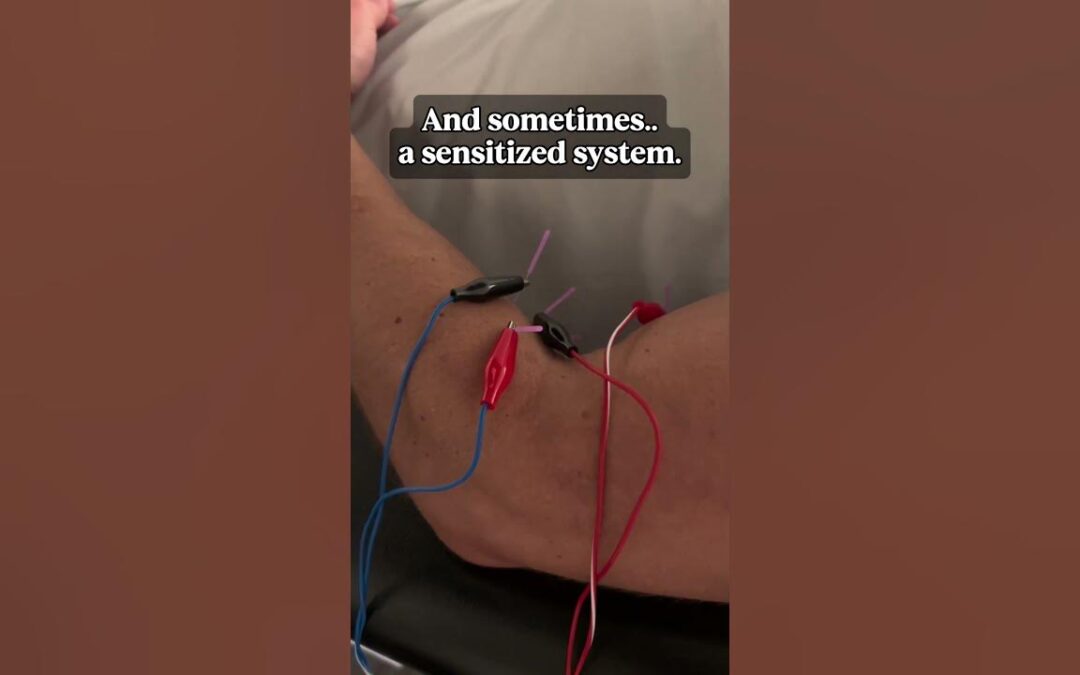
Dry needling may help the sore, guarded muscles that accompany sciatica. The bigger goal is getting your leg symptoms settling and helping you sit, walk and move with more confidence. At Mindful Movement PT, we look at both. We use McKenzie movement assessment, pain education and an activity plan to find what helps you, then consider needling when muscular discomfort is getting in the way.
One-on-one care with Dr. Emily Warren, DPT, Cert. MDT. We offer in-person appointments in Holladay, serving Greater Salt Lake City. No referral is needed. Dry needling is an in-person treatment; virtual coaching from anywhere can support movement education and exercise. Explore your next step in a free 15-minute consultation.
Why leg pain needs an assessment
Sciatica usually means pain traveling from the low back or buttock into the leg, sometimes with tingling, numbness or weakness. A tender buttock can also refer pain into the thigh. Those patterns can overlap, so the first step is understanding what your symptoms do, rather than assuming every sore spot needs a needle.
We ask where the pain travels, what changes it and which part of your day is hardest. We examine relevant movement and, when indicated, strength, sensation and nerve-related findings. Sitting tolerance, walking distance and the ease of getting out of a chair give us useful starting measures.
Our sciatica physical therapy guide explains the broader care pathway. For buttock pain that is difficult to interpret, see sciatica versus piriformis-related pain.
What needling may contribute
If muscle tenderness or guarding is making it difficult to move, dry needling may help that part of the picture. For example, we may compare a comfortable walking interval or a movement before and after treatment. The aim is to use any relief to help you practice the next useful step.
A calmer buttock muscle does not by itself tell us whether the nerve symptoms are improving. We still track how far pain travels, whether sensation or strength is changing, and how the benefit carries into daily life. We do not use needling to reposition a disc or release a compressed nerve.
The physical therapy guideline for low-back pain supports considering dry needling with other treatments for short-term improvement in chronic low-back pain. That is useful context, rather than a promise that every cause of sciatic pain responds to needling.
How it fits with movement and exercise
Dr. Emily’s McKenzie training helps us look at the leg symptoms as well as the sore muscles. We compare suitable movements, check what changes and teach a helpful strategy when one is identified. The sciatica guide explains research on centralization—symptoms moving closer to the spine—and what we watch as activity improves. Extension is one possibility, not a prescription for every person.
Centralization means symptoms retreat from farther down the leg toward the back. That can help guide an exercise choice, but a new or increasing loss of strength or sensation still needs assessment. If symptoms spread farther down the leg or stay worse after an exercise, pause and discuss the plan rather than pushing through.
Pain education helps make those changes less confusing. A sensitive nerve can make ordinary movement feel threatening. We explain what to monitor, choose a manageable starting point and gradually rebuild the activities you care about.
- Sitting: find a workable position and use movement breaks before a long, aggravating stretch.
- Walking: start with a duration that is tolerable during and after, then build in steps.
- Strength and lifting: practice an appropriate version before adding load, range or repetition.
- Flare-ups: use the agreed movement or activity adjustment, then review what changed.
The videos below show examples of Dr. Emily’s teaching. Use the movement selected for your presentation; a demonstration is not a test you have to force yourself to complete.
Key points from the video
- Dr. Emily demonstrates a progression from lying on the stomach to elbow support and a press-up.
- She explains that this example fits some sciatica presentations coming from the low back.
- Her instruction is to continue only if it helps the symptoms and stop if it does not.
How do we know the sciatica plan is helping?
A less-tender buttock is welcome, but we also want your leg symptoms and daily activities moving in a useful direction. Pick two or three simple comparisons:
- Symptom pattern: where does the pain or tingling travel, and is that changing?
- Everyday tolerance: can you sit, walk or get into the car more comfortably?
- Carryover: does the home plan help you recover after activity and gradually do more?
We review those changes alongside strength and sensation findings when relevant. If muscle tenderness improves but leg pain keeps spreading or activity stays stuck, we revisit the assessment and treatment mix. Our sciatica treatment page explains the full pathway beyond needling.
A patient perspective on finding a clearer plan
In her public Google review, Melanie T describes initial skepticism about virtual care for back pain and sciatica. Her story is about understandable guidance and a home plan, rather than dry needling. That distinction matters: we want any treatment to help you know what to do between visits. You can ask which current appointment format fits your needs.
For practical exercise decisions, read our sciatica exercise guide.
Risks and symptoms to report
Before needling, we discuss the muscles involved, alternatives and risks, including temporary soreness, bruising or bleeding and less common serious complications. Tell us about medications, bleeding concerns, infection, recent surgery and other relevant health conditions.
Contact the clinic if your response is unexpected or symptoms are worsening. New bladder or bowel control changes, numbness around the saddle area or rapidly worsening leg weakness need urgent medical care. See the clinical guidance on urgent neurological referral.
In-person needling and virtual coaching options
Dry needling takes place in person at our Holladay clinic, serving Greater Salt Lake City. Your first appointment provides 60 minutes of dedicated one-on-one time with Dr. Emily for assessment, explanation and a starting plan.
Virtual coaching from anywhere can help with movement education, exercise practice and wellness goals. It cannot deliver needling or replace every part of an in-person examination. If you are seeking clinical physical therapy, we confirm eligibility and suitability for your location and needs.
Frequently asked questions
Can dry needling fix sciatica?
It may help associated muscular pain, but it does not correct every source of leg pain. We assess the nerve-related symptoms and use an individualized plan of movement, education and activity progression. Needling can be included when it helps you make progress.
How do I know whether buttock pain comes from my back?
The pattern matters: where symptoms travel, changes with sitting or movement, and strength or sensation findings. A tender muscle alone cannot settle the question. We examine those pieces together rather than asking you to diagnose yourself from a painful spot.
Should I stretch my piriformis if my leg is tingling?
Do not repeatedly force a stretch that reproduces or spreads tingling. A movement that feels like a useful stretch for one person may irritate another presentation. Bring that response to the assessment so we can choose a more helpful starting strategy.
What if needling helps for only a day?
Tell us what felt better and what you could do during that time. Brief relief can be useful if it helps you practice and build activity tolerance. If the same symptoms keep returning without functional progress, we change the plan rather than repeating treatment indefinitely.
Do I have to have dry needling to work with you?
No. We can build care around assessment, education, exercise and appropriate hands-on treatment. Your comfort and preferences are part of the decision.
Sciatica that keeps limiting movement—and curiosity about dry needling.
We’ll explore your symptom pattern, explain the options and connect any treatment with the movements and activities you want back.
After a back injury, Christa valued the care and attention during an initial visit.
“She was very knowledgable and professional and showed more care than I ever would have expected.”
Look at the whole pattern of your symptoms
When muscle tightness and leg symptoms overlap, it can be hard to know which treatment to choose. We will assess both, talk through the options and practice a movement plan, using dry needling when it is a useful addition rather than the whole plan.
In your free 15-minute consultation, we’ll listen to what you want back, answer your questions and help you decide whether care with Mindful Movement fits. Send a request and we’ll contact you by phone or text to arrange a time.
Request your free 15-minute consultation
Dedicated one-on-one PT with Dr. Emily Warren, DPT, Cert. MDT—McKenzie certified. No referral needed. Your first PT visit is 60 minutes for assessment, explanation and a starting plan practiced together. The free consultation is a conversation before care.
In-person care at our Holladay clinic, serving Greater Salt Lake City. Virtual coaching from anywhere.
Ready to begin? Book your first 60-minute PT appointment · Call/text (385) 332-4939.