
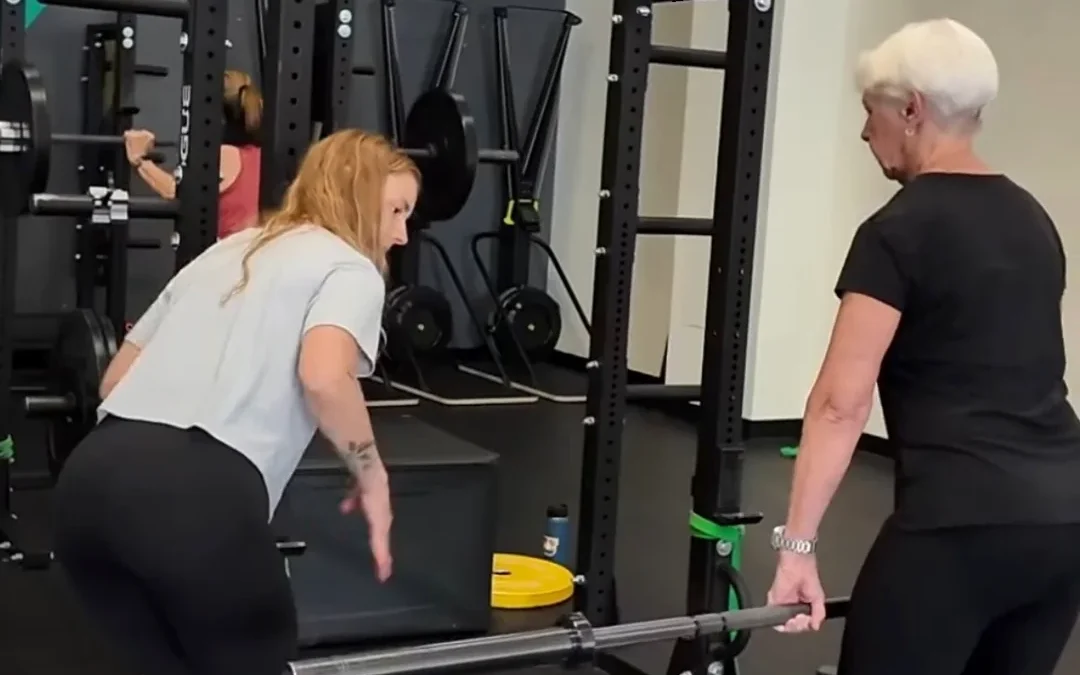
Many people with osteoporosis can keep hiking. The best preparation combines a route that fits your current ability with strength, balance and movement practice. If you have had a recent fracture, several fractures or new pain, we help you choose a starting point with your medical guidance in mind.
Maybe the climb feels manageable, but the downhill worries you. Maybe you used to love a long walk in the foothills and now wonder whether every stumble could lead to a broken bone. We want to help you find a way forward that feels understandable and achievable.

At Mindful Movement, we connect bone-health exercise to what you want your life to look like. For many people in Greater Salt Lake City, that includes spending time outdoors with family and friends.
Is hiking good for osteoporosis?
Hiking is a weight-bearing activity: you support your body against gravity while moving on your feet. It can be an enjoyable part of an active life. For a more complete bone-health exercise plan, we also want progressive resistance training and balance work.
Walking farther is not the only way to get stronger. A thoughtful strength program can work on the muscles you use to climb, control a descent and carry what you need. Balance practice addresses a different part of the challenge: staying steady when the ground is irregular or you change direction.
Bone-health exercise combines strength, appropriate impact and balance work. Emily helps you choose a starting level and practice it with control. Most people with osteoporosis can exercise; people recovering from fractures or with a history of spinal or multiple fractures should get advice about a suitable level.
We use hiking as a meaningful activity goal and build the physical preparation around you. Your medical team continues to monitor bone health while we work on the strength and skills that help you enjoy being outdoors.
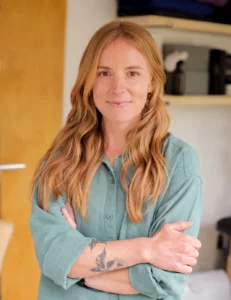
DPT, Cert. MDT
Your story comes first with Dr. Emily
Emily’s early work in neurological rehabilitation shaped her interest in movement, pain and what people want to get back to.
Emily connects your bone-health history with the walking distance, hills, balance and carrying demands of your next hike. Practice can begin with a manageable version of those tasks and progress as your strength and confidence allow.
Meet Emily and explore her approach · Request a Free Case Review to discuss how to feel more prepared for the trail.
What makes hiking different from walking on a flat path?
A trail may ask more of your body than its mileage suggests. The surface, slope, height of steps, exposure and distance from help all matter. Before increasing distance, think about which part of the outing is actually difficult:
| The challenge | What preparation can focus on |
|---|---|
| Climbing uphill | Leg strength, step-up ability and a pace you can sustain. |
| Going downhill | Controlled lowering, smaller steps and managing fatigue. |
| Uneven ground | Balance during weight shifts, turns and changes in foot placement. |
| Carrying a pack | A comfortable fit, a manageable load and lifting technique. |
| A long outing | Gradual time on your feet and enough energy for the return. |
This is also why getting to the top is only part of the plan. We want you to have enough control and energy to get back comfortably.
How can I prepare for hiking with osteoporosis?
Build leg strength for climbs and descents
A useful strength plan may include a sit-to-stand or squat variation, a hip hinge, step-ups and controlled step-downs. The starting height, support and resistance depend on your balance, symptoms and experience. We teach the movement before increasing the challenge.
For example, someone who hesitates on stairs may start by practicing a low step while holding a rail. Someone already comfortable with stairs may need a different exercise or more resistance. The goal is a progression you can perform well, rather than a workout borrowed from someone else’s starting point.
Dr. Emily uses BoneFit-informed guidance to adapt exercise to bone health and fracture history. We also draw on research such as LIFTMOR, which supports carefully supervised progressive strength training in selected people with low bone mass. That does not mean every hiker needs to start with heavy barbells.
Practice balance where support is available
Begin balance practice on a stable surface near a counter or rail, with the level of support you need. Depending on your ability, we may work on weight shifts, stepping in different directions, turning or changing stance. We progress the task as your control improves.
Loose rocks and an exposed trail are not a good place to discover that an exercise is too difficult. We want the practice environment to help you learn, so you can take the skill into a more demanding setting later.
Learn how to handle a pack and reach the ground
Practice putting your pack on and taking it off in a comfortable, controlled way. A raised bench or table can make the task easier than lifting it from the floor. When reaching down, a hip-and-knee bend can help you manage the movement without repeatedly rounding deeply through your spine.
People at higher fracture risk may need to modify repeated or end-range bending and twisting, particularly under load. Osteoporosis Canada’s Too Fit To Fracture guidance explains strength, balance and spine-safe movement. We help you apply those ideas to your own activities without making every movement feel forbidden.
Build walking tolerance gradually
Choose a manageable walk and repeat it until you feel comfortable with the effort and recovery. Then change one main demand at a time: time on your feet, incline, surface or pack load. It is easier to understand your response when you do not increase everything at once.
Notice how you feel during the outing, later that day and the following morning. General muscle tiredness can be part of training. New sharp pain, a significant change in symptoms or pain after a fall deserves attention rather than a push to complete the mileage.
What helps with downhill hiking?
Downhill can feel more challenging than uphill because you are controlling each step while your body moves downward. A few practical ideas can make planning easier:
- Start with gentle slopes. Save steep, loose or very large steps for when you have the preparation to manage them.
- Use a deliberate pace. Shorter steps may feel easier to control than reaching far downhill.
- Look ahead for footing. Pause in a stable spot when you want to enjoy the view or check your phone.
- Rest before your legs are exhausted. Plan breaks for the return as well as the climb.
- Practice step-down control beforehand. We can help you find an appropriate exercise height and support.
If downhill is the part that keeps you home, bring that specific concern to your appointment. It gives us a concrete goal to work toward.
Should I use hiking poles or a weighted backpack?
Poles can provide an additional point of contact, but they cannot guarantee that you will not fall. Practice coordinating them on familiar ground before a longer outing. Check the grip, adjustment and tips, and avoid relying on a pole planted on a loose or slippery surface. Your balance and arm comfort help determine whether poles suit you.
For a pack, carry what you need for the outing and choose a load you can manage. There is no universal safe pack weight for everyone with osteoporosis. A fracture history, symptoms and the terrain can change the answer.
Adding weight simply to “make the hike build more bone” is not our starting recommendation. We can progress strength more deliberately in an exercise setting while you keep your hike manageable and enjoyable.
How should I plan my first outings around Salt Lake City?
Choose the route by its current demands, not just a label such as “easy.” Foothill paths can have loose footing; shaded sections can hold ice; an otherwise gentle walk can include a short steep descent. Conditions change with weather and season.
Match the route to your current walking tolerance. Check trail conditions, carry essential equipment and allow for the weight of your pack and the return trip.
- Begin with predictable footing and a turnaround point you can choose.
- Check current conditions before leaving; postpone a route if traction or visibility is poor.
- Use footwear you know is comfortable and suited to the surface.
- Bring water, weather protection and the essentials for your route.
- Tell someone your plan or go with a companion.
- Allow time and energy for the return; turning around early can be a useful training decision.
An example of a gradual return
Illustrative planning example, not a prescribed schedule: a person comfortable on a neighborhood walk might first add a short, gentle incline on a familiar surface. After repeating that comfortably, they could try a short trail with predictable footing. Distance and more irregular terrain would come later.
If the descent reveals a difficulty, the next step may be strength and control practice, rather than a longer hike. We help you adjust the plan based on what you learn.
What progress should I look for?
Your next bone-density scan is only one part of the picture. For a hiking goal, we can track the things that make the outing feel more possible:
- Climbing a step with better control.
- Lowering down a step with less reliance on a rail.
- Walking a familiar route with fewer rests.
- Carrying your planned pack comfortably.
- Handling turns and changes in direction more confidently.
- Finishing with enough energy for the rest of your day.
Those changes help us see whether your preparation is working and choose the next challenge together.
Feeling stronger for the things you enjoy
Individual PT or Strong Bones Strength Class: where should I start?
Individual bone-health PT can be a useful starting point when pain, a previous fracture, a fall or uncertainty about exercise needs more personal attention. Your appointments are dedicated one-on-one time with Dr. Emily Warren, DPT, Cert. MDT, BoneFit trained.
If you are ready for a guided group setting, Strong Bones Strength Class offers a way to build strength and practice technique with support. Classes meet in Holladay on Tuesday and Thursday, noon–1 p.m. We can discuss which option fits your needs before you commit.
We also offer virtual coaching from anywhere for movement education and exercise goals. If your symptoms or fracture history call for medical assessment or in-person rehabilitation, we help you understand that next step.
Common questions about hiking with osteoporosis
Can I hike if my T-score is below −2.5?
A T-score alone does not determine the right route or activity level. Your fracture history, balance, symptoms and current ability matter. We use those details to help you plan suitable exercise; your medical team guides osteoporosis treatment. Our DEXA guide explains the numbers.
Can I hike after a compression fracture?
The timing and demands depend on the fracture, healing, symptoms and your medical guidance. A gradual return may begin with everyday walking and individual rehabilitation. Read our compression-fracture recovery guide before planning more challenging terrain.
Is hiking enough exercise for osteoporosis?
It can be a valuable part of your routine. We also want strength and balance training that addresses your needs. A person who hikes regularly may still benefit from learning how to progress resistance and practice control for descents.
Should I add a weighted vest to my walks?
Adding weight is not automatically the best next step. First consider your balance, fracture history, movement technique and the purpose of the walk. We can help you decide whether loading belongs in a supervised strength session or is suitable for another activity.
Our weighted vest and strength-training comparison explains the research and how to choose useful equipment.
What if I fall or develop new back pain on a hike?
Stop the activity and arrange appropriate medical assessment for new significant pain or injury. With osteoporosis, a minor fall can still matter. Urgent symptoms or inability to move safely call for immediate help. We can help with rehabilitation once the injury is understood.
Do I need a referral to work with Dr. Emily?
No referral is needed to begin in-person PT with us. We provide care in Holladay for Greater Salt Lake City and offer virtual coaching from anywhere. A Free Case Review can help you decide how to start.
Google review: Stephen P.
“Emily is a positive encouraging trainer. Her classes have helped me get stronger physically & mentally.”
Tell us what you want to get back to
Whether it is a neighborhood walk or a favorite trail, we are here to help you find a practical starting point. In a Free Case Review, we can listen to your concerns and discuss individual care, Strong Bones Strength Class or virtual coaching.
Dedicated one-on-one care with Dr. Emily Warren, DPT, Cert. MDT, BoneFit trained. No referral needed.
Related reading: Understanding your FRAX fracture-risk score · What LIFTMOR research means for strength training · Explore Strong Bones Strength Class.
Meet Dr. Emily Warren, DPT, Cert. MDT, our McKenzie-certified Doctor of Physical Therapy and BoneFit-trained clinician.