
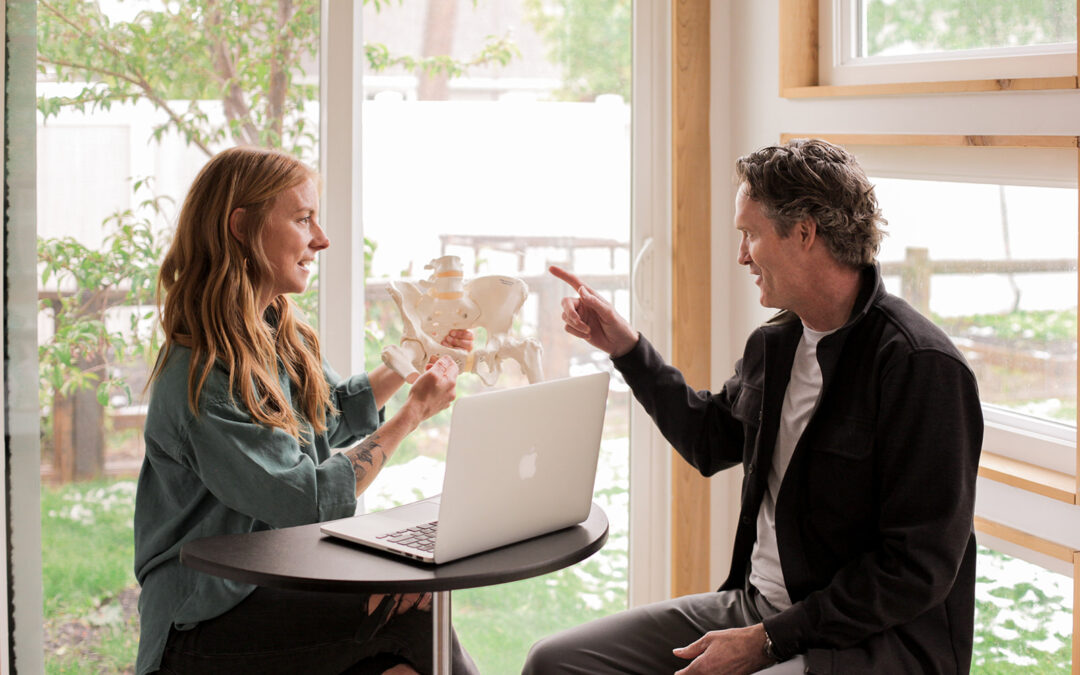
Dr. Emily Warren, DPT provides individualized post-surgical rehabilitation at Mindful Movement PT in Holladay, serving Greater Salt Lake City — including recovery after hip replacement, knee replacement, ACL reconstruction, rotator cuff repair, spinal surgery, and more. One-on-one care, no rushed visit slots, no PT aide handoffs.
Request your free 15-minute consultation Or call/text (385) 332-4939.
Quick Answer
After surgery, it can feel as though everyone has given you instructions but you are still unsure how to use them. We help turn that information into movement and daily function. With Dr. Emily Warren, DPT, Cert. MDT, you have dedicated one-on-one time to practice, ask questions and rebuild toward the activities you want back within your surgeon’s plan.
Post-Surgical Conditions We Treat
Total Hip Replacement Rehabilitation
Your surgical approach and individual instructions guide early movement and precautions. Rehabilitation may include safe transfers, walking with the appropriate aid, hip strengthening and stairs. Progress toward driving, carrying and recreation depends on clearance and function. Ask before changing restrictions or giving up a walking aid.
- Practice getting into and out of a chair or car within your precautions.
- Use the prescribed support until your clinician advises a change.
- Build walking and strength gradually, reviewing persistent swelling, pain or loss of function.
Total Knee Replacement Rehabilitation
Rehabilitation can address knee motion, swelling, quadriceps function, walking and stairs. The dose is adapted to healing, symptoms and the surgical plan. Early practice matters, but forceful exercise through escalating pain is not a universal requirement.
- Know the home exercises and how much to do.
- Discuss a workable balance of movement and recovery.
- Report unexpected symptoms or stalled progress so the plan can be reviewed.
ACL Reconstruction Rehabilitation
ACL rehabilitation progresses from early mobility and muscle function toward strength, running, jumping and sport demands as appropriate. The graft, associated procedures and surgical protocol affect timing. Return to sport requires discussion of strength, movement, symptoms and readiness, rather than the calendar alone.
Ask which milestone you are working toward, how it will be assessed and what activity is appropriate between visits. A single symmetry score does not by itself establish that unrestricted sport is safe.
Rotator Cuff Repair Rehabilitation
Protecting the repair and rebuilding shoulder function require a procedure-specific plan. Sling use, passive motion, active movement and strengthening depend on the surgeon’s instructions. We teach the permitted exercises and progress toward reaching, dressing, lifting or sport as clearance and function allow.
Bring the operative information and protocol. Do not add a stretch or resistance exercise because someone with a different repair used it earlier.
Spinal Surgery Rehabilitation
After microdiscectomy, decompression, fusion or a cervical procedure, the operation and healing restrictions determine the rehabilitation plan. Early work may address permitted walking, transfers and daily tasks. Strength, endurance and work or recreation demands are progressed when appropriate.
Do not automatically restart preoperative stretches, nerve glides or repeated back movements. New or worsening neurological symptoms should be discussed with the surgical team. See our back-surgery recovery guide for a fuller explanation.
Other Post-Surgical Conditions
- Labral repair (hip or shoulder)
- Meniscus repair or partial meniscectomy
- Ankle ligament reconstruction (Brostrom)
- Achilles tendon repair
- Plantar fascia release
- Carpal tunnel release
- Total shoulder replacement (TSA / RSA)
- Elbow surgery (tennis elbow release, UCL reconstruction)
Why Post-Surgical Rehab Quality Matters
Look for a plan that explains the purpose of each activity, follows surgical precautions and responds to your progress. One-on-one care gives you time to ask questions and practice with feedback. At Mindful Movement, we connect exercise with the daily tasks you need to regain and review the plan when it is not helping.
Rebuilding life after back surgery
Your first goals may be simple and important: walking to the kitchen, sleeping more comfortably or getting in and out of a car. Later, the plan may work toward lifting at work, hiking or exercise. We choose the next step from your clearance, symptoms and current ability.
How Dr. Emily uses pain education and movement assessment
Research on rehabilitation after lumbar surgery supports supervised exercise as a useful option, although evidence certainty is low and results differ by procedure. We translate that into practice with feedback: which daily task to work on, how much to do and when to progress. Pain education and movement assessment support the plan; surgical precautions guide every stage.
- Bring your instructions: include the procedure, restrictions and follow-up date.
- Choose a daily task: identify what you need help doing now.
- Practice within the plan: use the support, movement strategy and dose selected for your stage.
- Review before progressing: check function, symptom trends and any need to contact the surgical team.
In-person appointments are available in Greater Salt Lake City. Virtual appointments may support education and home-program follow-up when suitable; postoperative examination needs may require in-person care. Read the back-surgery recovery guide for warning signs and follow-up questions.
Meet Dr. Emily: an introduction to online care and coaching
Get to know Dr. Emily through her introduction to hybrid care and coaching. This is an overview of an appointment format, not a demonstration of treatment for a particular condition.
Coordination with Your Surgical Team
Seamless coordination with your surgeon is standard practice at Mindful Movement. Dr. Emily:
- Reviews your operative report and surgeon’s protocol before your first PT appointment when available
- Communicates with your surgeon regarding progress, complications, or protocol modifications when needed
- Provides written progress notes for your surgeon’s records upon request
- Can attend to patients pre-operatively for pre-hab, when appropriate, to optimize baseline function before surgery and improve post-surgical outcomes
Prehabilitation: Starting PT Before Surgery
If your medical team recommends preparation before surgery, use that time to review your starting function, suitable activity and arrangements at home. Dr. Emily can help you practice appropriate tasks and understand the expected rehabilitation pathway. Benefits differ by operation and individual; prehab does not guarantee fewer complications or a particular recovery date.
Frequently Asked Questions
When should I start PT after surgery?
Ask your surgeon when rehabilitation should begin and which restrictions apply. Some people receive mobility instruction in hospital; outpatient care may begin later. Starting the right activity at the appropriate time matters more than starting every exercise as early as possible. Bring written instructions to your appointment.
Can I choose my own PT clinic for post-surgical rehab?
Yes. In Utah, you have the right to choose your physical therapist. Your surgeon’s office may recommend a clinic affiliated with their practice, but you are not obligated to use it. Choosing a PT clinic based on quality of care, therapist credentials, and the type of attention you’ll receive is your right and is worth doing.
Do you accept insurance for post-surgical PT?
Mindful Movement PT is an out-of-network provider. We provide you with a superbill (detailed receipt) that you can submit to your insurance company for out-of-network reimbursement. Many PPO plans reimburse a significant portion of out-of-network PT costs. HSA and FSA accounts can be used for PT services. Please contact your insurance to understand your out-of-network PT benefits before your first appointment.
Book Your Post-Surgical PT Appointment in Salt Lake City
Whether your surgery was last week or last year — whether you completed a course of PT elsewhere and feel like you should be further along — Dr. Emily Warren can assess where you are and build a plan to get you where you want to be. Serving Salt Lake City, Holladay, Murray, Sandy, Cottonwood Heights, Millcreek, and all of Salt Lake County.
Dr. Emily Warren, DPT | Mindful Movement PT | Post-Surgical Rehabilitation & Orthopedic PT
Recovering from surgery without feeling you have to figure everything out alone.
We’ll follow your surgical guidance, practice your next steps together and connect progress with the everyday activities you want back.
Following back surgery, Happy valued listening and a personalized plan that considered the whole picture.
“Emily takes the time to listen and understand, creating a personalized plan that addresses the whole picture.”
Turn recovery instructions into a plan you can use
After surgery, ordinary activities can bring new questions. We’ll help you practice the movement and strength work in your plan, understand how it fits your recovery guidance and work toward doing more with confidence.
In your free 15-minute consultation, we’ll listen to what you want back, answer your questions and help you decide whether care with Mindful Movement fits. Send a request and we’ll contact you by phone or text to arrange a time.
Request your free 15-minute consultation
Dedicated one-on-one PT with Dr. Emily Warren, DPT, Cert. MDT—McKenzie certified. No referral needed. Your first PT visit is 60 minutes for assessment, explanation and a starting plan practiced together. The free consultation is a conversation before care.
In-person care at our Holladay clinic, serving Greater Salt Lake City. Virtual coaching from anywhere.
Ready to begin? Book your first 60-minute PT appointment · Call/text (385) 332-4939.
Back pain PT · Herniated disc treatment · McKenzie assessment
Related Conditions & Resources
- Back Pain Treatment
- Herniated Disc Treatment
- Knee & ACL Rehab
- Shoulder Pain Treatment
- Spine Physical Therapy
Not Sure Where to Start?
Take our free online assessment to find out if your back or neck pain could benefit from specialized physical therapy — and what type of treatment might help most.
Written by Dr. Emily Warren, DPT, credentialed McKenzie therapist
Dr. Emily is the owner of Mindful Movement PT in Salt Lake City. She is a credentialed McKenzie therapist. Learn about Dr. Emily’s credentials and clinical background, or explore how assessment, education and exercise guide care at Mindful Movement PT.
Holladay Clinic — Serving the Greater Salt Lake City Area
Holladay Clinic
4890 Highland Dr, Holladay, UT 84117
Near Cottonwood Heights & Millcreek
Serving Holladay, Salt Lake City, Sugar House, Millcreek, Cottonwood Heights, Murray, Sandy, Draper, Park City & surrounding communities. Virtual coaching appointments also available.